
Green Thumb, Good Design: Plants in Kitchen, Bathroom, and Mudroom Design

It starts in June. You crack the window, and suddenly your kitchen smells like the yard — cut grass, something floral, the particular green heaviness of a Rhode Island summer finally showing up. And you think: I want more of that in here. Not just the breeze, but the actual living, growing thing. Plants on the counter. Herbs you can pinch right off the stem. Something that drinks in the morning light from the window over the sink.
Bringing plants into your kitchen design, bathroom, and mudroom isn't a new idea — it has a name, biophilic design, and architects and interior designers have been building the research case for years that living things in a space genuinely change how we feel inside it. But the practical question is a different one: how do you actually do it room by room, in a way that works with the design rather than fighting it? Here's how we think about it.
Plants in the Kitchen: Your Most Productive Garden Bed
The kitchen is the natural starting point. You're already growing things here — or wishing you were, every time a recipe calls for fresh basil and you reach for a dusty jar of dried flakes instead.

Open shelving as a stage for herbs. If your design already includes open shelving, you have a natural place to land a collection of potted herbs. Basil, parsley, chives, mint, and thyme are all good kitchen companions — fast-growing, actually useful, and visually satisfying in a way that a third set of matching canisters usually isn't. Keep them toward the shelf closest to a window, and use consistent pots so the arrangement reads as intentional rather than accumulated.
Easy access to the outside garden. For homes with a yard, the best herb garden is sometimes literally outside — a raised bed just off the back door, close enough to reach with scissors mid-recipe. Worth bringing up with your designer early.
The Bathroom: A Spa That Grows Its Own Ambiance
Bathrooms are already doing a lot of design work — tile, stone, fixtures, hardware — and greenery is one of the few things that softens all of it without competing with it. A plant adds a layer of texture that hard surfaces alone can't provide (and if you want to go deeper on how texture shapes a room, [LINK: How Texture Impacts Your Design]), and does something genuinely useful in a bathroom environment: most humidity-loving plants actively absorb excess moisture from the air, which helps the space breathe.
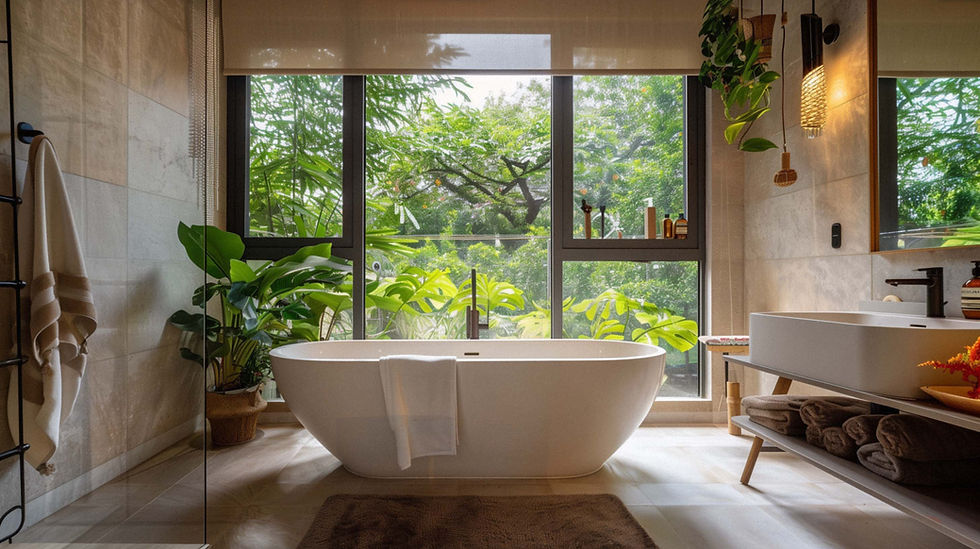
The workhorses: snake plant, spider plant, ferns. Low light, high humidity, minimal fuss — these three handle bathroom conditions without complaint. Snake plants earn their keep in tight corners; spider plants trail and self-propagate; Boston ferns bring the most texture but ask the most of you in return.
Orchids, for rooms with real light. One white Phalaenopsis on a bathroom vanity is, decoratively speaking, the closest you can get to a spa without spending anything. They need a window and not much else — the bathroom humidity covers most of their watering needs on its own.
Air plants: no soil, no mess. Tillandsia absorb moisture directly from the air, which makes a steamy bathroom essentially self-watering for them. Mount them on driftwood, tuck them into glass bowls, or hang them on the wall entirely — they add greenery without any visual weight.

Hang eucalyptus in the shower. Tie a bundle to your showerhead with a rubber band. The steam activates the oils in the leaves, and for the next week or two your shower smells like a spa — and looks like one too. The dusty blue-green stems work with virtually any tile palette.
The Laundry Room or Mudroom: The Garden's True Front Door
If you have outdoor space — a garden, even just a container garden on the back deck — your mudroom or laundry room is where that relationship with the outside actually lives in the house. And if you don't have a dedicated mudroom, a laundry room corner or a stretch of back-hallway wall can do the same job with the right design.

Design it for potting, not just passing through. A mudroom that functions as a potting station needs a few specific things: a countertop that can handle soil and water without complaint (quartz is ideal — it's non-porous, so it wipes clean without absorbing anything — [LINK: browse our countertop options]), a deep sink for rinsing pots and cleaning roots, open shelving for containers and supplies at a height you can reach without bending, and a pull-out compost bin positioned right in the counter run so soil goes there rather than on the floor. This last detail sounds minor until you're dealing with the third bag of potting mix that week.
Hanging racks for drying herbs. If you're harvesting from a kitchen garden, the mudroom is a logical drying station. A simple ceiling-mounted rack — or even a tension rod mounted between two cabinets — gives you a place to hang bundles of lavender, rosemary, sage, or thyme upside-down to dry. Once dried, they go back into the kitchen as pantry herbs, which closes the loop in a way that feels genuinely satisfying.
Bring the storage vocabulary of the kitchen into the mudroom. The cabinetry we design for mudrooms and laundry rooms — including Fabuwood, one of our most durable lines — draws from the same manufacturers and design language as the kitchen, so the transition between spaces feels cohesive rather than like a budget afterthought. If this is a space you're planning, it's worth exploring our storage and cabinetry options early — before the square footage has already been allocated.
Where to Find Your Green in Rhode Island
Four Rhode Island spots worth knowing before you start filling shelves.

Thea Plant Co. — Providence. Providence's go-to plant shop for houseplants, planters, soil, and accessories — plus plant care and delivery if you're not ready to make the trip.
JIF Jack Iannotti Flowers — Coventry. Family-owned since 1974 and one of the more beloved florists in the state. Known for weddings and special occasion arrangements, but their shop is also a lovely source for fresh eucalyptus bundles and seasonal greenery for the home.
The Stem Bar Custom Florals & Events — Chepachet. A small, family-run floral shop in the center of Chepachet — look for them in the rotary. Beyond arrangements, they carry plants and run floral workshops if you want to go deeper than just buying something off a shelf. Worth a trip up Route 44.
Central Nurseries — Johnston. Right here in our backyard — planters, landscape accessories, soil, and plant care products, everything you'd need to stock a potting station once it's been built.
Design exists in conversation with the people who live in a home — and the people who live in homes in Rhode Island tend to have a particular relationship with the outdoors, with the seasons, with the way June smells coming through an open window. Building that relationship into the design, room by room, is one of the more lasting decisions you can make. It's also, as it turns out, one of the most pleasant ones to live with.
Sources
Mira Showers: Bathroom Plants That Absorb Moisture
BBC Gardeners' World Magazine: Best Plants for a Bathroom
This Old House: How to Create the Perfect Mudroom
Clean Eating Magazine: I Tried Indoor Hydroponic Gardening and Things Got Out of Control
Dorai Home: 37 Indoor Herb Garden Ideas to Spice Up Your Kitchen


Comments